What patterns should PMMs be looking for in customer conversations?
Buyers reveal intent and hesitation in the specific language they use, not just their answers. Here are the patterns top PMMs learn to listen for.
 Bhumika GohilHead of Revenue5 min read
Introduction
For Product Marketing Managers (PMMs), customer conversations are the purest form of market research. They are a direct, unfiltered line to the emotional and practical needs of the buyer. While many PMMs listen to these interactions—whether they occur in sales calls, support tickets, interviews, or reviews—the most effective PMMs don't just gather anecdotes; they actively hunt for patterns.
A single customer anecdote is a story; a consistent pattern across dozens of customers is a market truth. By focusing on identifying and interpreting these recurring themes, PMMs can move beyond generic messaging to build narratives that truly resonate, validate pricing strategies, and drive powerful, data-informed go-to-market decisions. The difference between a good PMM and a great one often lies in their ability to translate these raw conversational patterns into strategic, revenue-generating insights.
With the guidance from industry experts, we have narrowed it down to three patterns that PMMs look for in customer conversations:
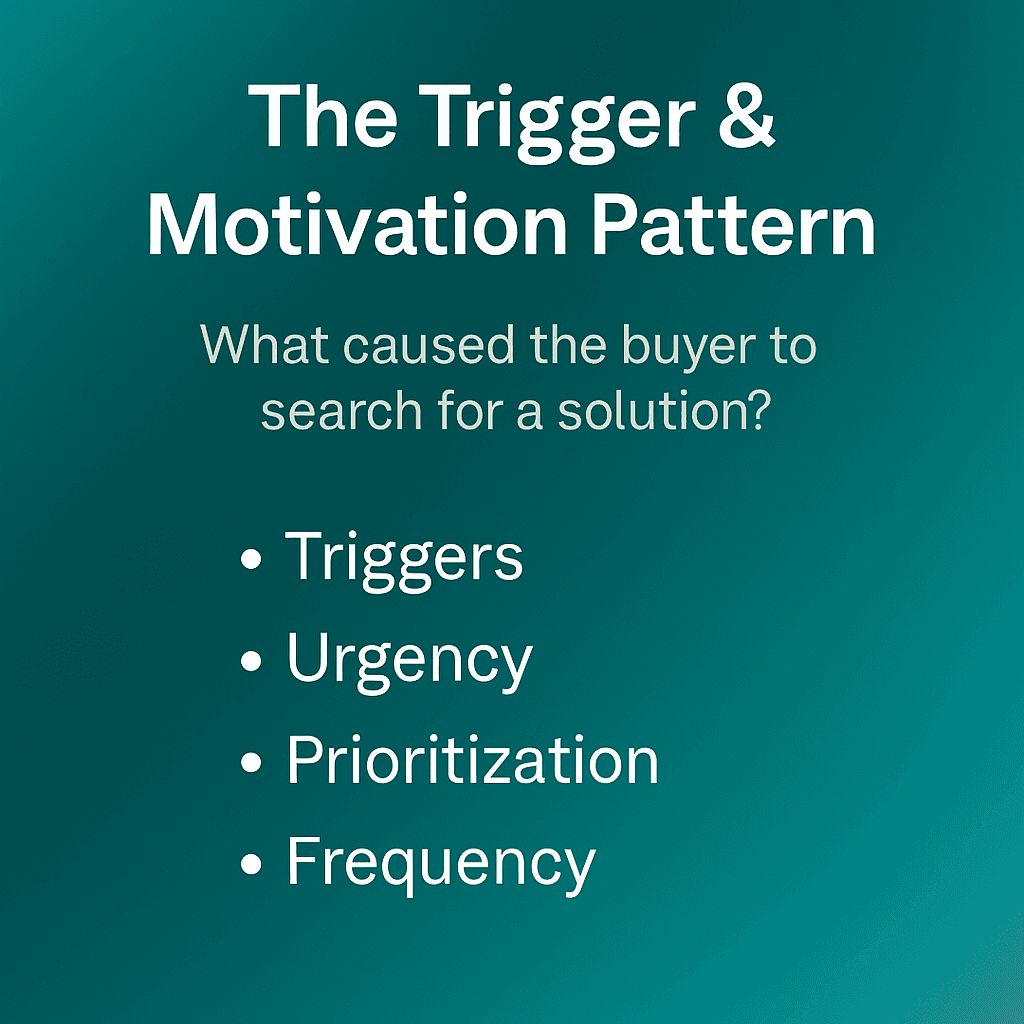
1. The Trigger & Motivation Pattern: Identifying the moment of realization
What triggers someone to start looking for a solution?
Customers don't initiate a search for a solution just because one exists; they start because they hit a wall. PMMs must listen for the moment of realization or frustration that drives action—the trigger. This is your entry point for precise positioning.
We go deeper on how to systematically surface these trigger moments—rather than relying on gut feel from a handful of calls—in How PMMs Can Analyze Buyer Intent Inside Conversations (Not Dashboards).
- The Problem's Urgency and Priority: Is the business challenge an operational issue intended for incremental gains, or is it a mandated problem (e.g., a compliance requirement) they must solve? Listen to how they describe the problem — do they frame it as a "significant impediment" or as "a minor operational concern"? This indicates the severity and willingness to pay.must solve? Listen to how they describe the problem: Is it a “e.g., describing it as a "significant impediment" versus "a minor operational concern”. This indicates the severity and willingness to pay.
- The Prioritization Hurdle: How do they decide what to improve next? What criteria do they use to prioritize the numerous challenges within their core business processes? These criteria inform the top-tier benefits you should lead with.
- The Frequency of the Problem: Establish the temporal regularity of the issue: Is it experienced in near real-time, daily, or is its manifestation a periodic, quarterly event? Frequency directly influences the required solution architecture (e.g., real-time automation vs. periodic reporting) and justifies the associated investment level.
2. The Friction and Solution Pattern: Identifying the roadblocks and workarounds
A comprehensive understanding of the customer's solution journey prior to engaging with your organization is crucial. This pattern reveals the true competitive landscape, highlights systemic points of failure, and exposes instances where your current process introduces friction, causing hesitation or delay.
- The Workaround Revelation: What quick fixes or stop-gap measures are they currently using to address the problem? This could be an in-house team, a third-party service, or a manual process. It reveals the customer's current cost (both labor and opportunity) and their inherent attitude toward problem management. The PMM goal is to position the product as a demonstrable reduction in this current, unsatisfactory effort.
- The Hindrance/Rejection Pattern: If they have actively looked for solutions and rejected others before finding you, why did they reject them? Look for patterns like "It was SaaS-only, and we need on-premises," or "It couldn't handle the data volume." Identifying these rejected constraints can surface your product's hidden value—features you possess but do not actively market—which can become a decisive positioning statement.
- Messaging and Onboarding Gaps (Friction): What confuses them, slows them down, or causes them to ask multiple clarifying questions? These moments of friction often point directly to weaknesses in your messaging, onboarding documentation, or the product experience itself. This analysis directly informs the creation of targeted sales enablement and improved documentation to pre-emptively address these hurdles.
3. The Language Pattern: Finding the voice of the Customer.

The words and phrases utilized by customers are invaluable strategic assets. This pattern highlights the crucial need for PMMs to move beyond internal company jargon and adopt the precise vocabulary of the market. Messaging that incorporates the customer’s native terminology achieves immediate resonance, authenticity, and clarity.
- The Emotional Phrasing: Track the exact words and descriptive phrases used by customers to articulate their pain, frustration, desired state, or moment of success. These phrases (e.g., "It's too much manual churn" or "I need seamless reporting") are superior to internal marketing copy. Adopting their phrasing makes your messaging feel instantly more authentic.
- Core Process Terminology: Observe how customers naturally describe their core business processes and functional roles. It is common for internal product teams to use technical language (e.g., "API endpoint integration"), while the customer uses outcome-focused language (e.g., "making sure the data talks to my CRM"). PMMs must prioritize the customer's language to validate that the marketing material addresses their reality, not the engineering specification.
Once you start tracking this vocabulary consistently, it tends to surface messaging opportunities your team didn't know existed—we break down how to spot them in Messaging Clues Hiding in Your Sales Calls.
Final Thought: The true strength of Product Marketing is rooted in deep listening. For PMMs, customer conversations are a continuous source of market intelligence. By systematically tracking patterns—specifically related to triggers, friction, and language—PMMs transition from using anecdotes to interpreting verifiable market truth. This discipline ensures messaging is authentic, directly resolves objections, and accelerates the path to revenue.
Proponent surfaces these patterns automatically across every recorded conversation — book a demo to see it on your own calls.
Want more insights like this? Subscribe to our newsletter.